Review: Mandala Style Flower Line Art Embroidery
As a designer who spends half my life staring at digitized files and the other half watching needles punch through fabric, I have developed a keen eye for what works in the real world. We often get swept up in complex, high-density designs that promise to wow customers, but there is a quiet power in simplicity. Recently, I spent some time evaluating the Mandala Style Flower Line Art Embroidery to see if it holds up under the scrutiny of actual production. This isn’t just about how it looks on a screen; it is about how it behaves on a tote bag, a sweatshirt, or a delicate baby onesie.
The First Impression: Elegance in Restraint
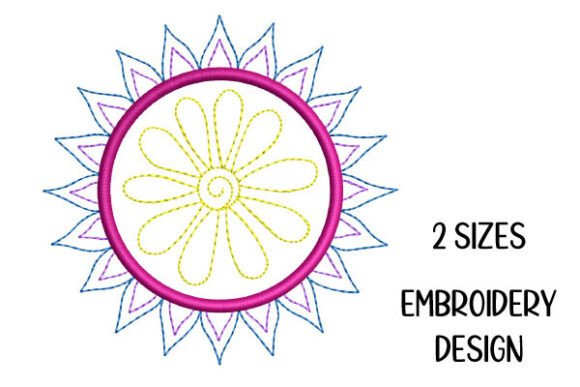
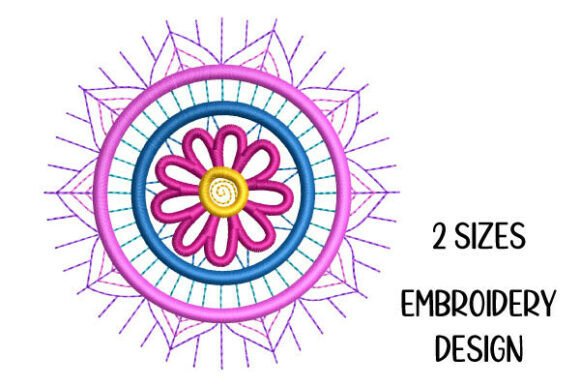
When I first loaded this machine embroidery design into my software, the immediate takeaway was clarity. In an industry cluttered with over-digitized patterns, this piece stands out for its precise, clean lines. The mood it creates is one of timeless elegance rather than flashy novelty. It feels intentional. The layout is balanced, avoiding the chaotic symmetry that sometimes plagues mandala-style artwork. For a craft business owner or an Etsy seller, this visual personality is crucial. It suggests sophistication without shouting, making it an ideal candidate for boutique branding where subtlety sells.
The design relies heavily on the interplay of negative space and line work. This is not a heavy fill stitch project. Instead, it utilizes what appears to be a refined running stitch or light satin work to define the petals and geometric center. This approach reduces bulk, which is a significant advantage when working with varied fabric textures. Whether you are stitching on a thick terry cloth towel or a lightweight cotton shirt, the design maintains its integrity without puckering the material excessively.
Real-World Application: From Mockup to Merchandise
To truly test the viability of this embroidery file, I imagined it in several common commercial scenarios. Let’s start with custom apparel. I visualized this design centered on the chest of a premium heavyweight sweatshirt. Because the lines are clean and not overly dense, the design breathes. It doesn’t look like a plastic patch stuck on the fabric; it looks integrated. For a small shop product, this level of integration builds customer trust. It signals that the maker understands the medium.
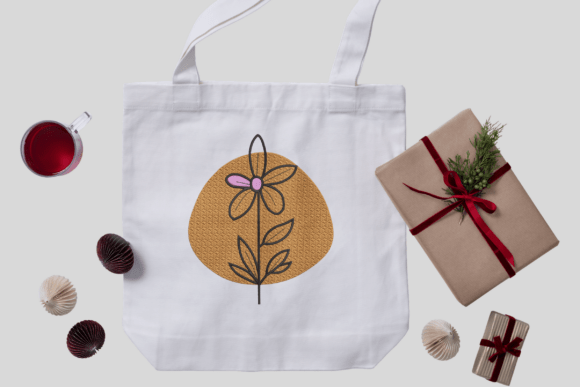
I also considered its use as a tote bag design. Tote bags are often made from canvas or duck cloth, which can be challenging for detailed work. However, the petite nature of this mandala flower means it avoids the distortion that larger, denser designs suffer from on loose-weave fabrics. It would sit beautifully near the top handle or as a subtle accent in the corner. For holiday embroidery projects, such as personalized gifts for friends, this design offers a neutral yet artistic touch that appeals to a wide demographic. It is not seasonally specific, which increases its shelf life in your digital product catalog.
Navigating Fabric and Hoop Constraints
While the design is versatile, it requires thoughtful placement. If you are working with stretchy fabric, such as jersey knits for baby embroidery, the open line structure is forgiving. However, you must still use the correct stabilizer. A cut-away stabilizer might be overkill for such a light design, but a tear-away could leave residue if the stitches are too close together. I recommend testing on scrap fabric first to determine the right balance.
Curved surfaces present another challenge. If you plan to use this on a cap or hat, the rigid front panel is your best friend. The design’s symmetry helps hide minor alignment issues, but you must ensure the hoop size is appropriate. Since the description notes it is "petite," it likely fits well in smaller hoops, making it perfect for left-chest logos on polos or small embroidered patches. Avoid placing it on highly textured fabrics like bouclé or heavy fleece, where the fine lines might get lost in the pile. The visual appeal relies on contrast, so thread colors must pop against the background.
Commercial Viability and Brand Consistency
For digital embroidery file sellers and creative entrepreneurs, the value of this design lies in its adaptability. It serves as an excellent anchor for a cohesive collection. Imagine offering this as part of a bundle with matching monogram fonts or complementary botanical elements. It enhances brand consistency because the style is distinct yet unobtrusive. When customers see this level of precision in a finished product, they associate it with professionalism. This perception directly impacts buyer engagement and allows for higher price points on handmade products.
Moreover, the design translates well into printable mockups. Because the lines are sharp, digital previews look crisp, which is essential for online listings. Whether you are selling the digital asset itself or the physical embroidered item, the presentation matters. A clean, well-digitized mandala suggests that the creator cares about quality, fostering loyalty among repeat buyers.
Practical Designer Notes for Execution
Before committing to a full production run, keep these technical considerations in mind:
- Thread Contrast: Test the design in black and white mockups first. If the lines disappear, you need higher contrast between your thread colors and fabric texture.
- Stitch Density: Check the stitch density settings in your software. Even though it is line art, ensure the connections between segments are secure to prevent unraveling after washing.
- Scale Verification: Confirm the actual dimensions. "Petite" is subjective. Measure it against your intended hoop size to ensure it doesn’t look lost on large items like pillow covers or blankets.
- Licensing Check: Always verify the license terms. Can you sell the finished product? Can you resell the digital embroidery file? Clarify this before listing items on Etsy or at craft fairs.
- Fabric Testing: Try it on both light and dark backgrounds. Some line art designs rely on shadow effects that may not translate well on dark fabrics without proper underlay stitches.
Final Verdict on the Design
The Mandala Style Flower Line Art Embroidery is a strong contender for any designer’s library. It avoids the pitfalls of over-complication and delivers a refined aesthetic that works across multiple categories, from nursery decor to adult custom apparel. It is not just a decorative element; it is a functional design asset that respects the limitations of the embroidery machine while maximizing visual impact.
For the hobbyist, it offers a satisfying, quick stitch-out that looks professional. For the commercial embroiderer, it provides a reliable, low-risk option for client projects that demand elegance without excess bulk. Just remember to respect the fabric, choose your thread wisely, and always stitch a test sample. When executed with care, this design elevates the perceived value of any handmade product, turning a simple item into a cherished keepsake.